This year's NDSC 2014 Annual Convention had a wide variety of vendors in the vendor hall. We are going to feature some of the organizations which may be less familiar to many, but they are doing wonderful work, or creating wonderful items! We won't be able to feature everyone, so you might want to go to the convention next year and check them all out for yourself. It was inspirational to see so many passionate people following their dreams and blazing their way in the world!
Eli's heart was started by Eli Craig's mom and dad after he had open heart surgery in 2012. Seeing families in the hospital who had traveled to the Children's Hospital of Philadelphia from all around the country, some of whom were there for months at a time, Eli's mom and dad decided they needed to do something to help alleviate some of the financial strain on these families by creating a foundation to help with the travel expenses associated with getting their children the surgery they need. They ask people to donate frequent flyer miles, credit card reward points and (of course) cash is always accepted.
There were many vendors with dazzling signs and flashy displays designed to get your attention, but despite the simple red tablecloth, and Eli's heart banner hanging off the front of the table, there were many traffic jams at their table all day long. Maybe it was because it was such a unique idea and there were so many people that thought it was a great thing to do. Maybe it was many of the conference attendees had wished for some help when their child had surgery. Or maybe, just maybe, it was the best pr tool in the Eli's Heart toolbox.....Eli.
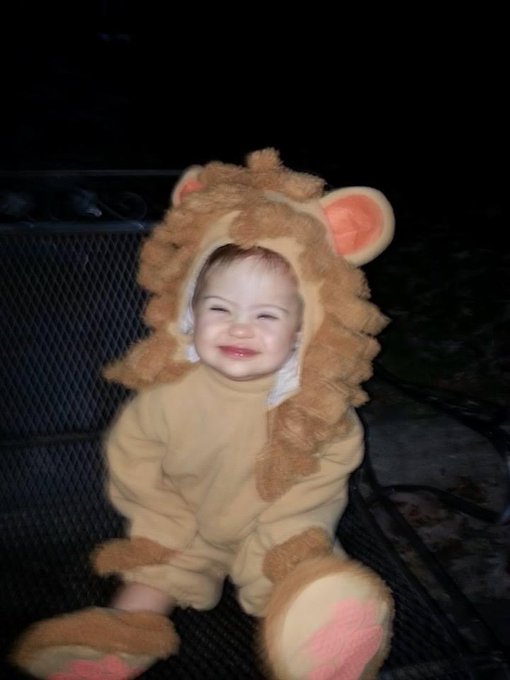
He was running around and making people smile and laugh every time I went past!
Best of luck and keep up the great work Eli's Heart!
Showing posts with label Medical. Show all posts
Tuesday, August 5, 2014
Monday, April 14, 2014
Bryce's Battle with Acute Lymphoblastic Leukemia
Here is the story of Bryce's battle with ALL in the words of his mom, Julia.
Bryce Bartczak is a 3 1/2 year old little boy who is generous with his smiles, hugs and fist bumps. In January 2014 our lives took a crazy turn when we learned he had leukemia. Here is Bryce's story:
Monday, January 13,
2014, Bryce was taken to the pediatrician because it appeared he had another
ear infection. Bryce had tubes put in his ears in October but we were told he
could still get ear infections. Sure enough, he did have an ear infection and
was given an antibiotic. That evening I was holding Bryce's hand as we walked
into the play room and he slipped on a toy. Since I had his hand in mine he did
not fall or hit his head. I scooped him up in my arms because I thought he may
have been frightened by the slip. Bryce arched his back and would not stop
arching. Paul said he could see something in his mouth. I immediately began
abdominal thrusts and back blows. When Bryce lost consciousness and began
turning blue, I began rescue breathing. Bryce did start breathing by the time the
ambulance arrived. He had a chest X-ray at the ER and it showed he did not
aspirate and he appeared to be back to normal.
We took Bryce to the
pediatrician on Tuesday for a follow up. She reviewed the chest X-rays and
after we told her the story once again of what happened she felt it may not
have been a choking incident. We began the process of scheduling an appointment
with a neurologist.
In the following days
Bryce began looking shaky when he would stand up and he also began scooting on
his bottom to get from place to place. By Saturday he started refusing to walk
and wanted to be carried. On Monday, January 20, I called the pediatrician. She
said it may be a virus and give it 48 hours but call her if we noticed any
other changes.
On Tuesday Bryce woke
with a temperature. He should not have a temperature due to the antibiotic he
was on for the ear infection so Paul took Bryce back to the pediatrician. The
pediatrician said that some blood work was needed and she was able to get us in
at Hope Children's Hospital in Oak Lawn.
At Hope Children's
Hospital we learned Bryce had Acute Lymphoblastic Leukemia. It is in his bone
marrow but not in his spinal fluid. Bryce had many procedures and the
chemotherapy treatment was started. After 10 days (Tuesday, Jan 21-Thursday,
Jan30) at the hospital it was determined that Bryce's numbers were good enough
that we could bring him home. Bryce's course of treatment will be over the next
2 1/2 years.
Update:
Bryce has completed the
"induction phase" of his chemotherapy treatment. Unfortunately, his
bone marrow showed a higher percentage of leukemia cells than we expected. This
means that Bryce will need a more aggressive treatment plan. Bryce has Down
Syndrome which means he is at a greater risk for toxicity (side effects) and
now with the more aggressive treatment he will be an even higher risk.
Please continue to pray
for our family. It is going to be a long journey but it will be worth it when
the strongest guy I know is cured!
Love, Julia
Ambulance Ride
Some of you may know that Grandma Eileen Haase had her first ever ambulance ride...of course it was with Bryce. Bryce didn't want Grandma getting bored during her visit.
We are required to carry epi pens because Bryce could have an allergic reaction to the various chemo drugs. On Tuesday, March 4, Bryce appeared to be having problems breathing. Grandma and Bryce's school teacher were at home and acted quickly. Ms. Meghan administered the epi pen and Grandma called 911. Paul and I met the ambulance at the hospital. It was determined that Bryce was nauseated from the medications (he received 4 different chemo drugs within 24 hours) and it was causing him to gag and dry heave and appear to have problems breathing. We now give Bryce medicine to help with the nausea. No, things won't be boring for us for quite some time! Thank you for your continued prayers!
Spinal Time
Today's visit to the cancer center went so much better than last week! In this portion of treatment Bryce received spinals taps every week for four weeks (in addition to chemo through his port, in liquid form, pill form and shots). Last Monday Bryce's counts were very low. The team decided to give him platlets and then they would do the spinal. The platelets weren't available so they moved forward with the spinal which means they remove spinal fluid for testing and then insert a chemo drug. The spinal went well and since we had decided to return the next day for his platelets and red blood cells the other chemo drug was administered through his port. So, after arriving at 7:30 am we were all ready to leave at 4:30 pm. When the nurse began removing the access to his port, Bryce passed out. After having him checked by the doctor and waiting 30 minutes it was determined that he became upset, started to cry and due to his low counts he may have held his breath which contributed to his passing out. As we started to drive away from the cancer center Bryce started to cry and passed out again. Needless to say, Paul turned the car around and back to the cancer center we went. Bryce was admitted to the hospital where he was given IV fluids and red blood cells. This seemed to do the trick. Bryce had color in his face and was back to himself even though it was at 11pm. The following day Bryce received his platelets as well as an EKG and Echo of his heart. By 4 pm Tuesday, we were on our way back home.
Today, Bryce received the final spinal in this series and all went well. His counts are low but he did not receive any transfusions.
We want to thank everyone for their positive thoughts and prayers...and ask that you continue! Only a couple more years to go!
Universal Language
Bryce had a very long day at the cancer center this past
Monday, April 7. We arrived at 7:30 am. After it was determined that Bryce's
counts were just enough for him to receive the chemo, we had to wait for his
urine to reach a certain dilution before the chemo could be administered. That particular
chemo cannot stay in the kidneys or it will cause damage. So, after the chemo
was in his body the next step is to flush his system with IV fluids for several
hours.
Upon returning to the Day Room (where children stay when
receiving their chemo) after another restroom visit, Bryce saw a girl who was
about his age and of course he just knew she wanted to play with him. I was
trying to tell him we needed to find our own toys when one of the nurses asked
the little girl if Bryce could play with her. She said "si". Bryce
and I pulled up a chair to where she and her mother sat. The little girl and her
mom spoke Spanish. Bryce says some words but uses mostly signs. I don't know
any Spanish. And yet the four of us
played together for over an hour. We played with toy foods, animals, shape
sorters and puzzles. It was fun and we were all smiling.
I love how children just want to play. They don't care if
you have hair, what chemo you are hooked up to, or if you can speak their
language because for them play was the universal language. And play sure made
the time go by much faster!
Saturday, April 12, 2014
Heart Girls Don't Quit!
Natalie was born on December 25, 2002 and was diagnosed at birth with Down syndrome (Ds) and a congenital heart defect called tetralogy of Fallot (toF). She will be having her 7th heart surgery on Monday, April 21, 2014. They will be replacing her pulmonary valve and patching her narrowed pulmonary arteries. This is her heart story.
Tetralogy of Fallot is a rare, complex heart defect. It occurs in about 5 out of every 10,000 babies. Since approximately 50% of children with
Down syndrome have a congenital heart defect, all newborns with Ds are routinely
screened by cardiac ultrasound.
When Natalie was born, her oxygen level was 86% (normal is above 95%, and
usually 99%).
Tetralogy of Fallot actually consists of 4
defects:
![]() |
| http://www.nhlbi.nih.gov/health/health-topics/topics/tof/ |
Tetralogy means four, and Fallot was the doctor who gave a very detailed description of the four anatomical characteristics of the defect. There is nothing surgically that they do for the overriding aorta, or the boot shape of her heart. The large hole and the pulmonary stenosis, however, require surgical intervention.
Surgery #1
Natalie had her first heart surgery in March of
2003, while she was in the hospital with RSV(a lower respiratory infection).
Because Nat's oxygen levels were starting to decrease before she got
sick, there was some question if the trouble with her oxygen levels were caused by
the RSV or her heart. They decided to do a central shunt to
help the blood distribute more the way that it should. During this stay,
she developed a fungal bladder infection, a MRSA pneumonia and finally an
enterococcal blood infection. After 42 days in the PICU and 7 days
in a regular room....she was finally ready to go home. At this point, she
had a feeding tube that continuously provided nourishment, as she was too
weak to eat enough and we were watching every calorie that went in and every
calorie she expended. She would keep that feeding tube for about a year, and it
would turn out to be a blessing in disguise!
![]() |
| This is Natalie a few weeks before being released from the hospital. It was the first time I got to hold her in 19 days. |
During that next year, we would have 7-8 professionals we would see on a
weekly basis: a home health nurse, a dietician, a physical therapist, an
occupational therapist, a developmental therapist, a speech therapist, the
cardiologist and the pediatrician, in addition to routine ear nose and throat doctor visits, as well as the eye doctor. Finally, when Natalie was 9 months old, she was the size and age
that would provide the best outcome for her 'full repair'.
![]() |
| Natalie, age 9 months, the day before her first open heart surgery. |
Surgery #2
A 'full repair' for tetralogy of Fallot (toF) means
that she would have open heart surgery to repair the quarter sized hole in her
heart and put a patch in her pulmonary valve to make it a little larger. Her
dad and I donated blood directly for Natalie before this surgery. Unfortunately, one of the tests showed that
our blood was not able to be used for her, but thankfully there were three
units of blood available that could be used.
This surgery was very rough on her in many ways, and her lungs were
still weak from the previous illnesses. It took a couple of weeks in the
hospital and a lot of prayers before she was ready to come home. Never one to take the easy route, Natalie developed a chylothorax during this stay.
Needless to say, I had NO CLUE as to what that was. As I would learn, it basically means that lymphatic fluid was pooling in the lining around the lungs which can be a fairly rare complication of chest surgery. What it meant
for Natalie was a fat free liquid diet of some horrible tasting
'formula' for a full 6 weeks. Thank God for that feeding tube!
I can’t imagine any baby drinking it willingly, and she never had to
taste a drop!
Surgery #3
At 13 months old, Natalie started showing signs of heart failure once
again. She was sweating when eating, had labored breathing, and was just tired
all of the time. A visit to the cardiologist showed that there was a 1mm
'residual VSD'...which is a fancy way of saying that one of the stitches in the
patch for the hole in her heart came undone. Apparently, as I would
learn, the heart lining of children with Ds is not the same as the rest people without Ds, and residual VSD's 'aren't uncommon'. Back to the OR. This would be Natalie's third heart surgery. Again, it was a blessing to have that
feeding tube! I was able to keep her hydrated during the night before surgery while she
slept. The surgery was a cardiac catheterization (where they go in
through the groin) and they were going to take some measurements and see if
they could balloon her pulmonary arteries open as they were increasingly
narrowing without doing a full open heart surgery. Unfortunately, it was not successful. During this hospital stay, Nat developed an allergy to the antibiotic that was given to her to fend off any possible infection. Her 4th heart surgery would happen in February 2004 at 14
months old. This time it would be
another full open heart surgery.
Surgery #4
Before this surgery, I was once again able to keep her hydrated through
the night, which meant that getting the IV's started in the morning was not as difficult
as usual. The feeding tube was, once again, our friend. During this
surgery, it was determined that there were a lot of adhesions (bands of
scar tissue) that were basically pulling down on her arteries. Regardless, they were
still narrowed, and she required some gortex patches on the right and left sides. Happily, it was
determined that she was also big enough to have the smallest replacement valve
that they had, put in place. This valve was supposed to last 3-5 years. During
the surgery, they had difficulty finding the 1mm VSD and the electrical system in her heart ended up damaged in the process. A few days after surgery,
the home health nurse said her pulse seemed low, so we went back into the
hospital and an ECG revealed that she didn't have any P waves (Although I know nothing about reading ECG's, I could tell by
the look on the physicians assistant's faces that P waves are something that we all
need, and it wasn't good that Nat didn't have any! I was right.)
Her doctors and I monitored her for a few months, since this type of issue
can sometimes correct itself. Nat wasn't that lucky.
Surgery #5
About 6 months after surgery she woke up one morning and looked like she hadn't gone to bed, even though she had slept for over 12 hours. They put a 24hr heart monitor on her and we found out that her heart rate was dropping to 22 in the middle of the night. Nine days later, we were back in the OR for a pacemaker....that was surgery #5. Natalie was only two and a half.![]() |
| Natalie, age 2 1/2. Three days after her pacemaker implantation. |
Because of the RSV and MRSA when she was a baby, Nat developed asthma.
We spent a few weeks every 6 months or so in the hospital for pneumonia
or RSV (yes...RSV...again...when she was 5!) Around the age of 5, I started giving her
omega 3's/fish oil and her lungs improved markedly! We were able to
discontinue the maintenance asthma medicine, and haven't ended up in the hospital
again for lung issues.
Surgery #6
Finally, in 2012, the battery in her pacemaker was nearing the end of
its viability and needed to be replaced. It was supposed to be a 'simple'
surgery, but the pacemaker, which had been located in a pocket of muscle in her
abdomen, was pushed through her abdominal wall and was directly on her
intestines. Not good. So a whole new pocket needed to be created
and the pacemaker needed to be relocated. It turned into much more
complex surgery than originally anticipated. Natalie came through it like a trooper though!
![]() |
| Still a little groggy after having her pacemaker replaced. |
None of this slows Natalie down....
The valve that was implanted when she was 14 months kept on working for almost 10 years before her cardiologist decided it was time for it to be replaced. That was in February of 2014. That is where we are now.....heading toward her 7th heart surgery on April 21, 2014 which will be her 12th hospitalization.Like Natalie always says, “Heart girls don’t quit and failure is not an option!”
Friday, February 28, 2014
New Drugs May Transform Down Syndrome
Some very interesting information on the strides that have been made in just the last few years about helping people with Down syndrome live independent, fully included lives! Click on the picture or the link for the full story....

http://www.salon.com/2014/02/22/new_drugs_may_transform_down_syndrome_partner/
Wednesday, November 20, 2013
Understanding Proprioception and Vestibular Function
Two great videos explaining the behaviors that people with proprioception and vestibular function issues can sometimes display. These may be helpful to share with people who are getting to know your child....or just don't seem to 'get' your child....
Proprioception:
Vestibular Function:
Proprioception:
Friday, September 6, 2013
Single Injection Reverses Down Syndrome in Newborn Mice
No matter how you feel about the implications of this research...it's still pretty amazing!
Make sure you also read the full article here...it gives more detail and information!
Subscribe to:
Posts (Atom)


